15 Wabi Sabi Bedroom Ideas for a Peaceful and Imperfectly Beautiful Retreat
Introduction
Wabi sabi bedroom design is rooted in the quiet acceptance of imperfection, simplicity, and authenticity. Instead of chasing symmetry or polished perfection, it leans into natural materials, softened edges, and surfaces that carry the passage of time.
A wabi sabi bedroom doesn’t feel staged. It feels lived in, grounded, and emotionally calm. Linen bedding falls loosely instead of being tightly arranged. Wood surfaces show grain instead of hiding it. Plaster walls carry subtle irregularities that shift with changing light. Everything feels intentional, yet effortless.
This approach is less about decorating and more about feeling—creating a space where stillness becomes the main design language.
Wabi Sabi Bedroom Ideas That Embrace Natural Beauty and Imperfection
1. Layer Soft Linen Bedding in Earthy Neutrals
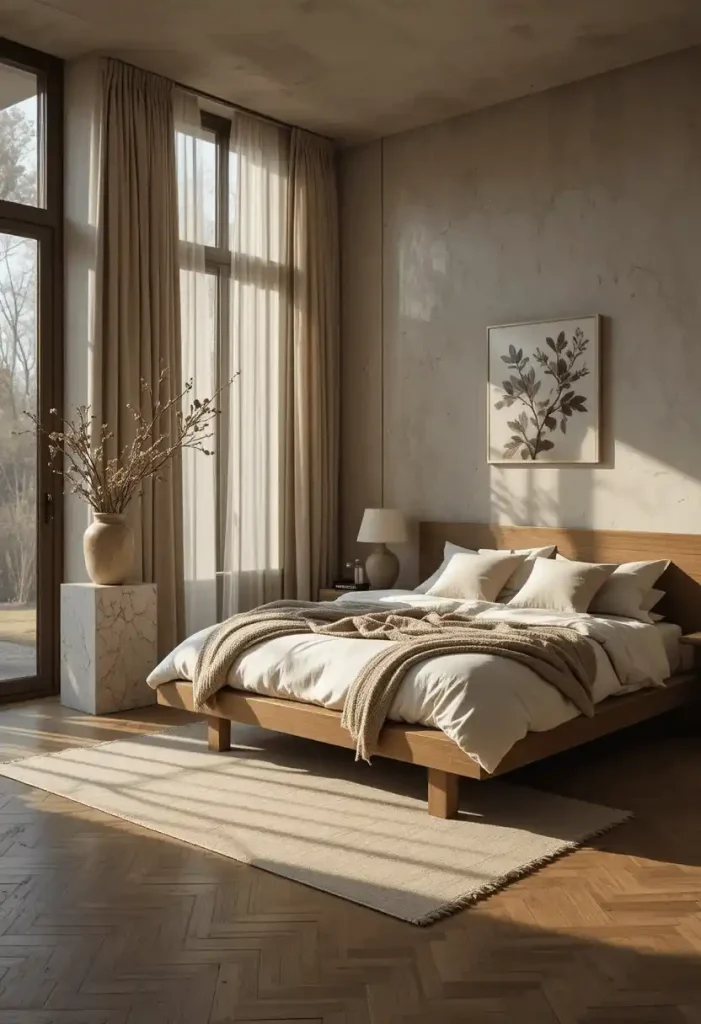
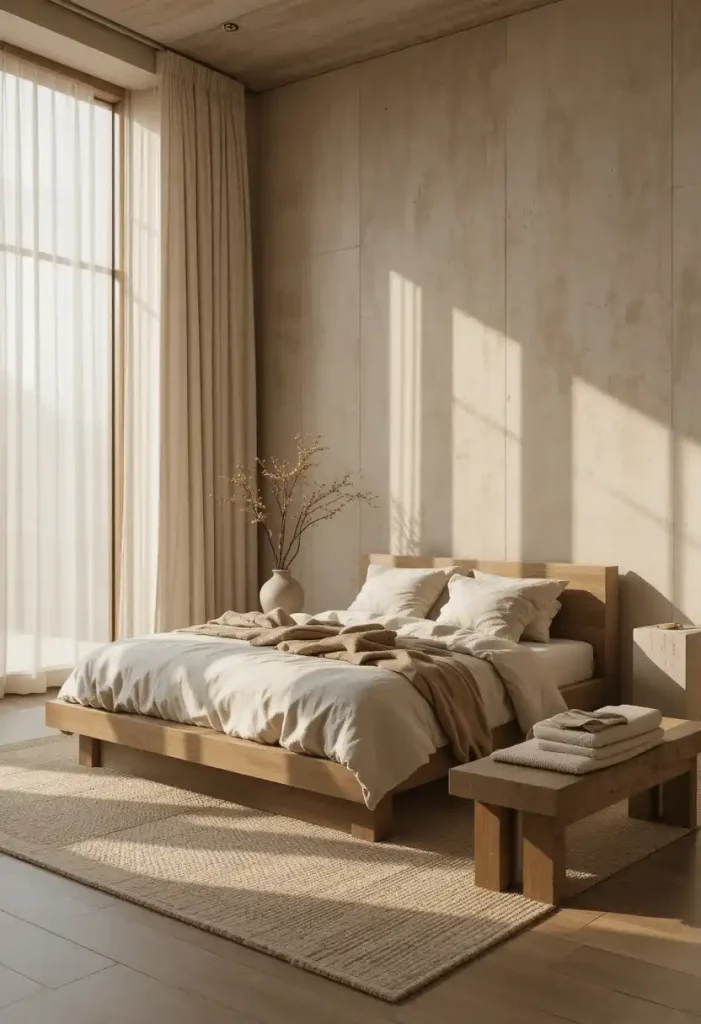
Linen introduces an immediate softness to the room, especially when left unpressed and naturally wrinkled. Shades like oatmeal, sand, stone, clay, and warm ivory blend into each other in a quiet rhythm of texture and tone. The bed becomes less of a structured object and more like a soft, breathable landscape.
2. Choose a Low Wooden Platform Bed
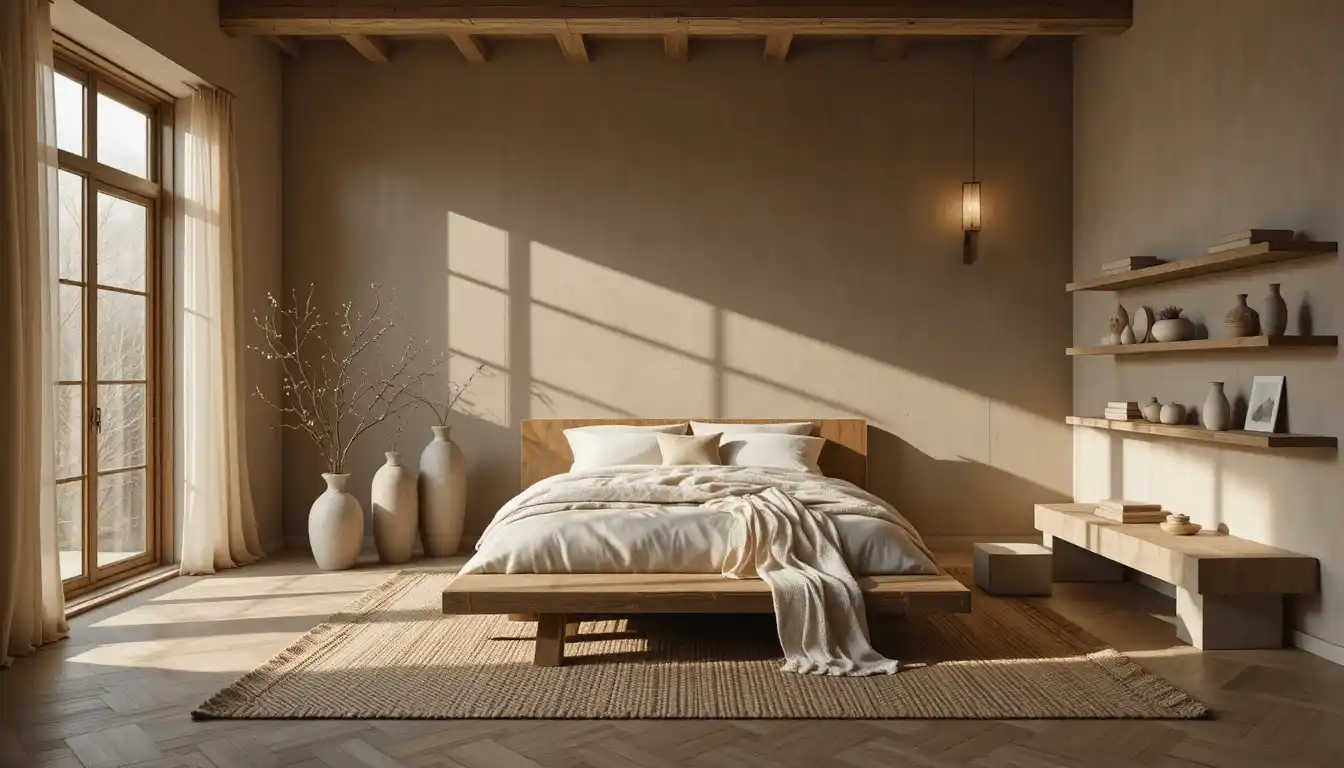
A low bed changes the entire perception of space, grounding the room closer to the earth. Crafted in oak, ash, or reclaimed wood, it highlights grain, knots, and imperfections that make each piece unique. The room around it feels more open, almost meditative in its simplicity.
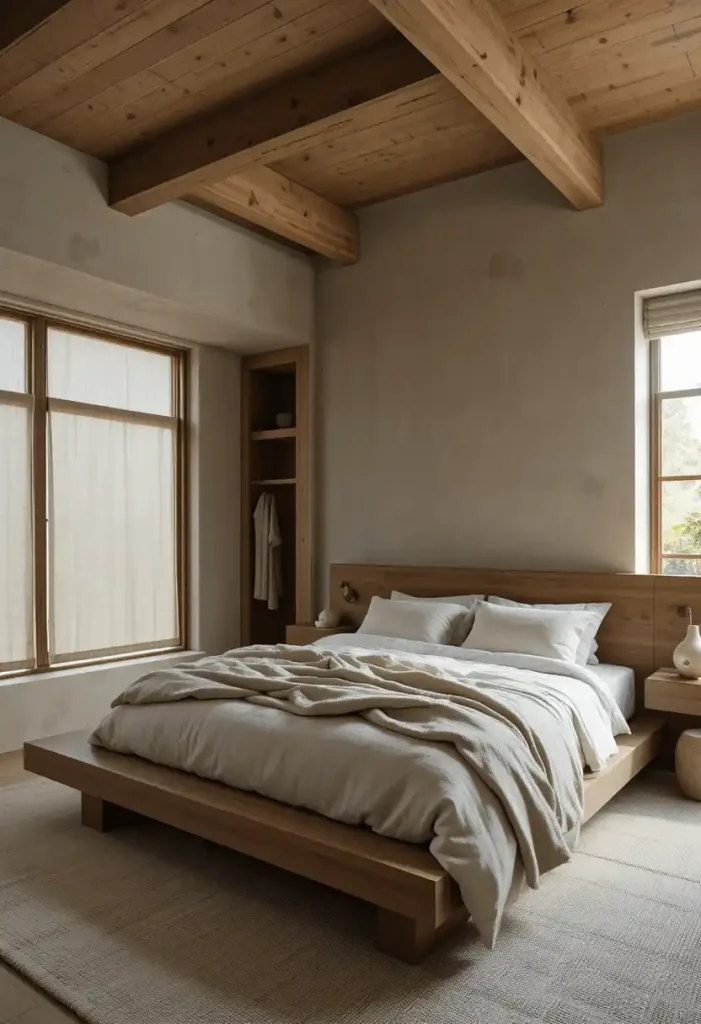
3. Add Limewash or Textured Plaster Walls
Instead of flat painted surfaces, limewash and plaster introduce movement and depth. Light reacts differently across every uneven surface, creating a quiet visual rhythm throughout the day. Soft neutrals like greige, clay, and muted beige enhance this natural variation.
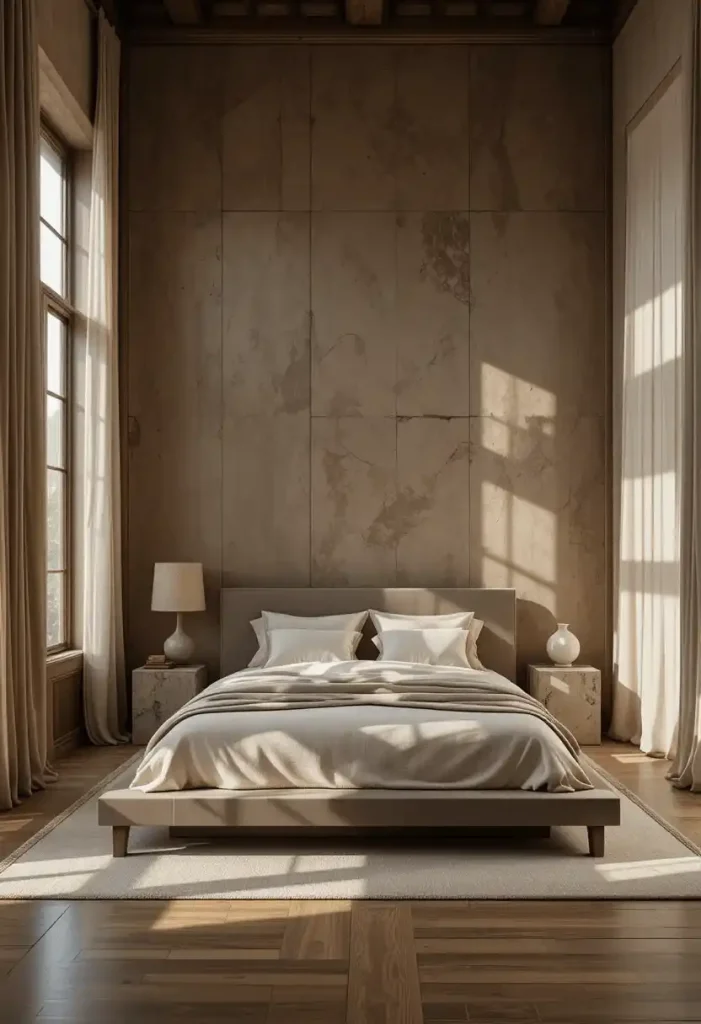
4. Incorporate Reclaimed Wood Furniture
Reclaimed wood carries history within its surface. Scratches, softened edges, and aged tones give furniture a sense of character that new materials cannot replicate. It brings warmth and emotional depth into the space without needing decoration.
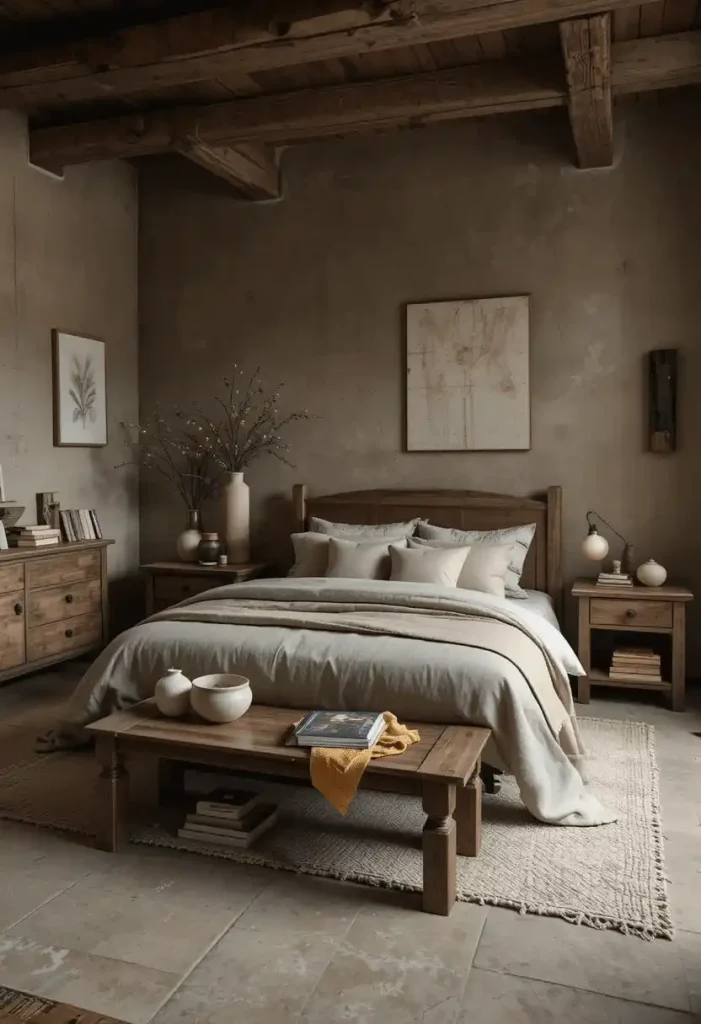
5. Decorate With Handmade Ceramic Pieces
Handcrafted ceramics add a human presence to the room. Their slight irregularities, matte textures, and earthy glazes feel organic rather than manufactured. Whether placed on a bedside table or shelf, they introduce quiet, sculptural detail.
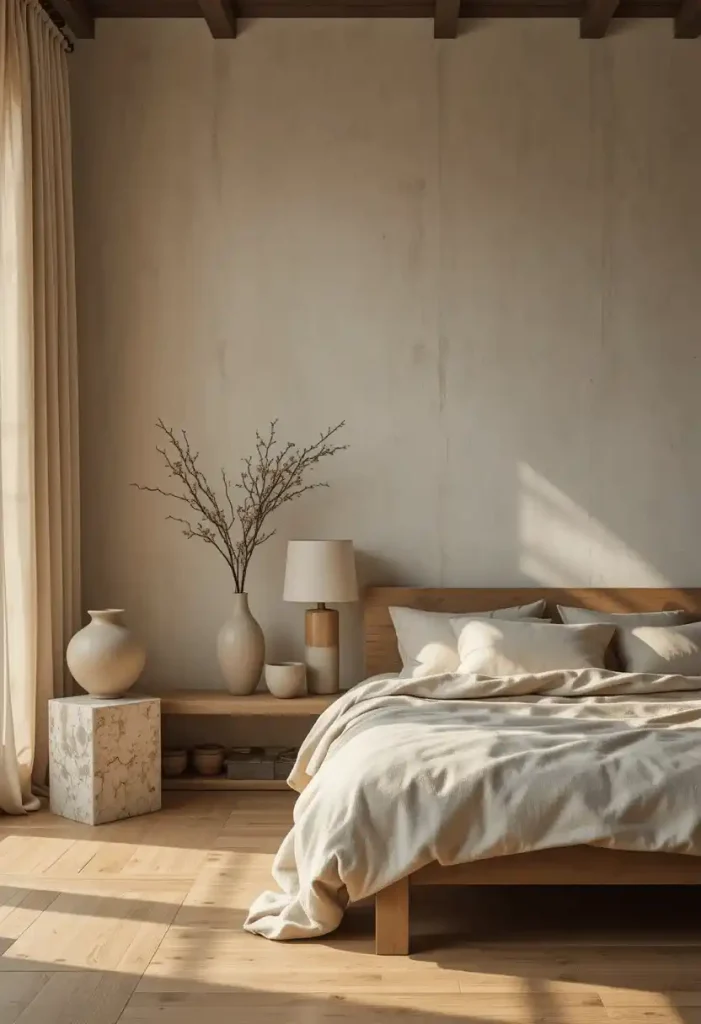
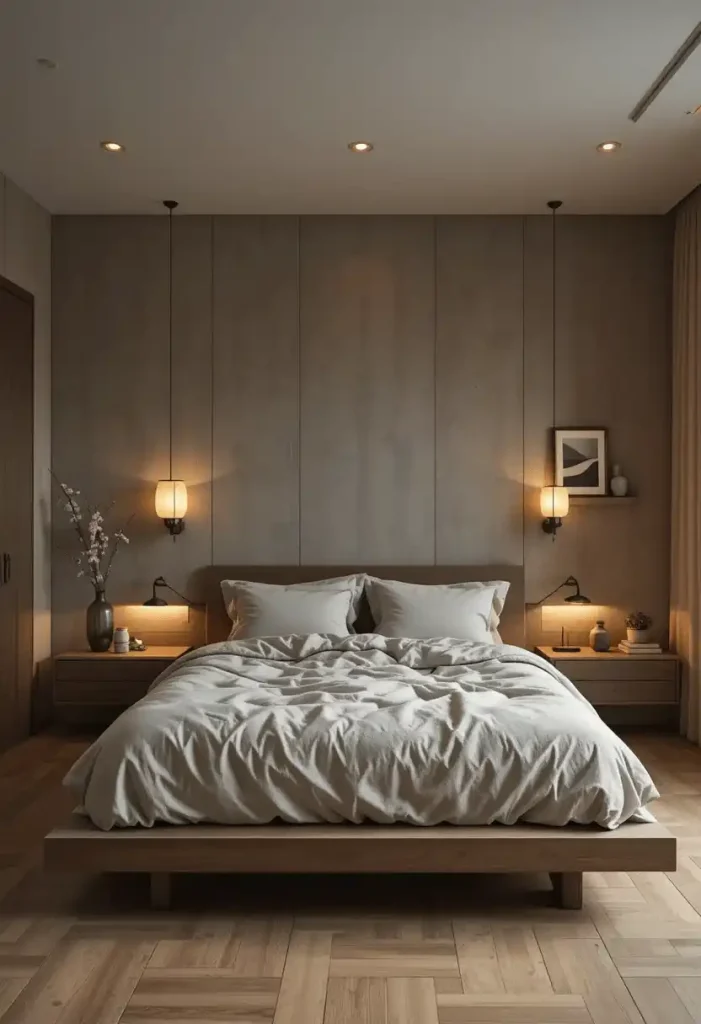
6. Use Soft Ambient Lighting Instead of Bright Fixtures
Lighting in a wabi sabi bedroom is never dominant. It is layered, soft, and diffused. Paper lanterns, warm sconces, and concealed light sources create gentle shadows that enhance texture instead of erasing it.
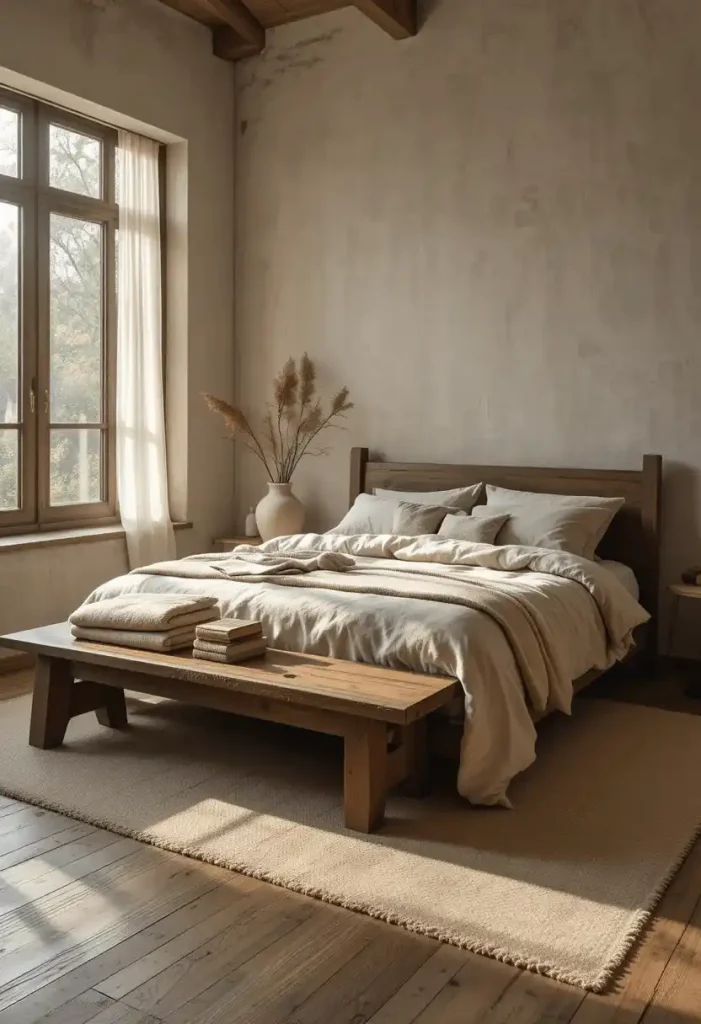
7. Introduce a Rustic Wooden Bench at the Foot of the Bed
A weathered bench adds both utility and character. It holds folded linen or remains empty without feeling incomplete. Its worn texture blends naturally into the room’s calm, unpolished aesthetic.
8. Embrace an Earth-Toned Color Palette
The palette stays rooted in nature—clay, sand, mushroom, olive, taupe, stone, and warm gray. These tones never compete; they merge softly, creating a continuous sense of calm throughout the room.
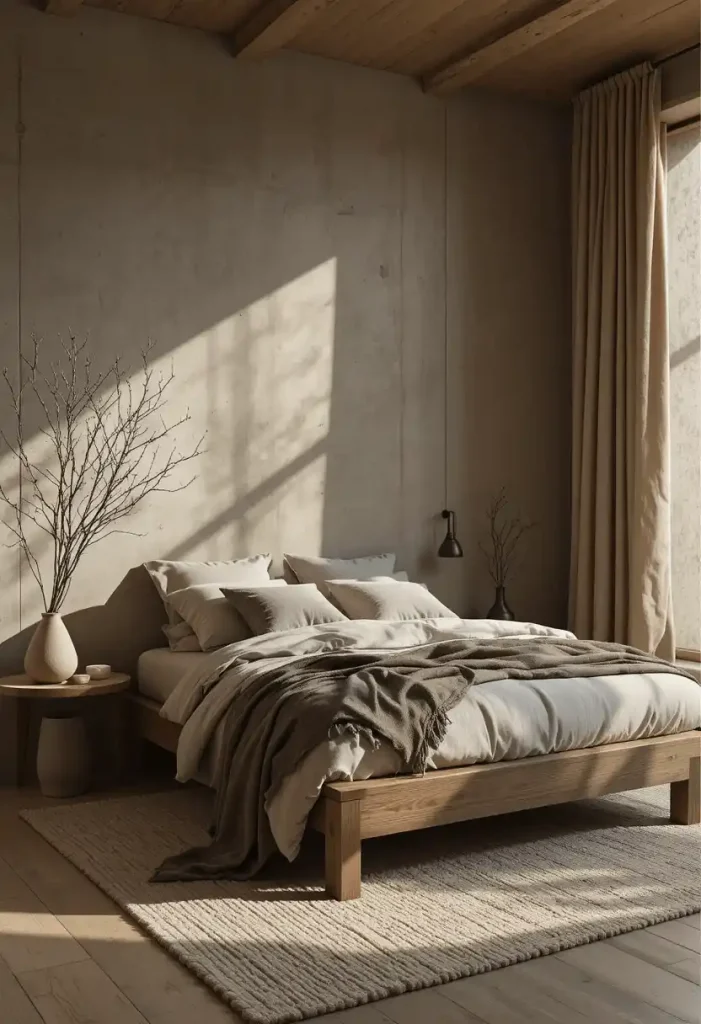
9. Display Dried Branches and Natural Arrangements
Instead of structured floral styling, dried branches or wild stems bring a sculptural stillness to the room. Placed in ceramic vessels, they feel quiet, expressive, and beautifully unforced.
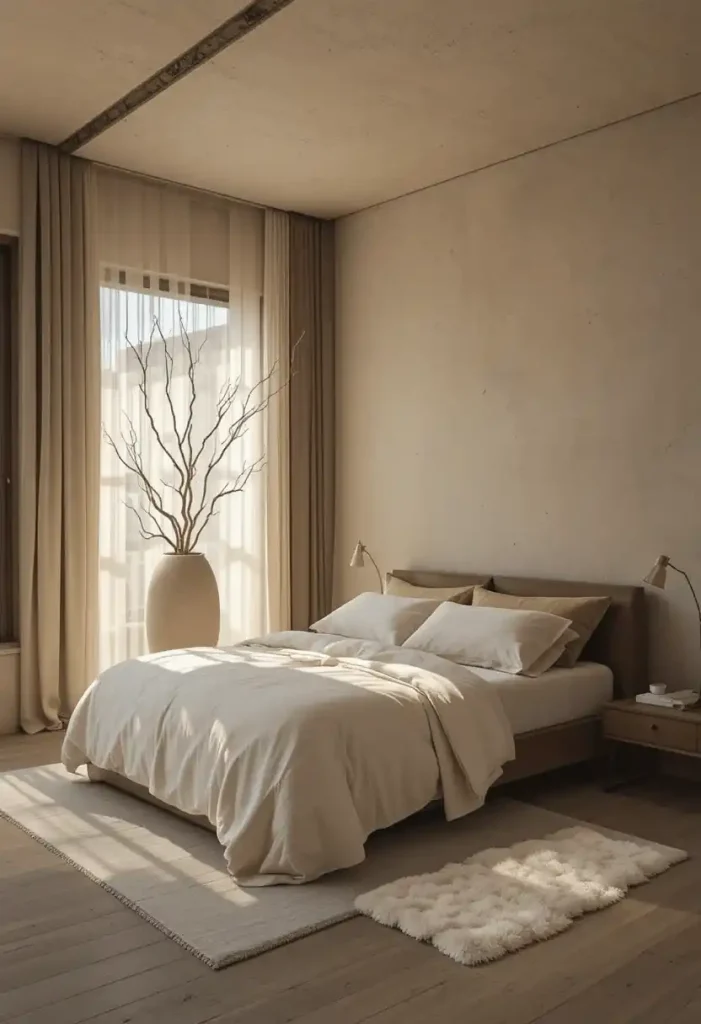
10. Keep Decor Minimal and Intentional
Every object is chosen with restraint. Surfaces are allowed to remain open, creating space for visual breathing. The emptiness is not absence—it is balance and clarity.
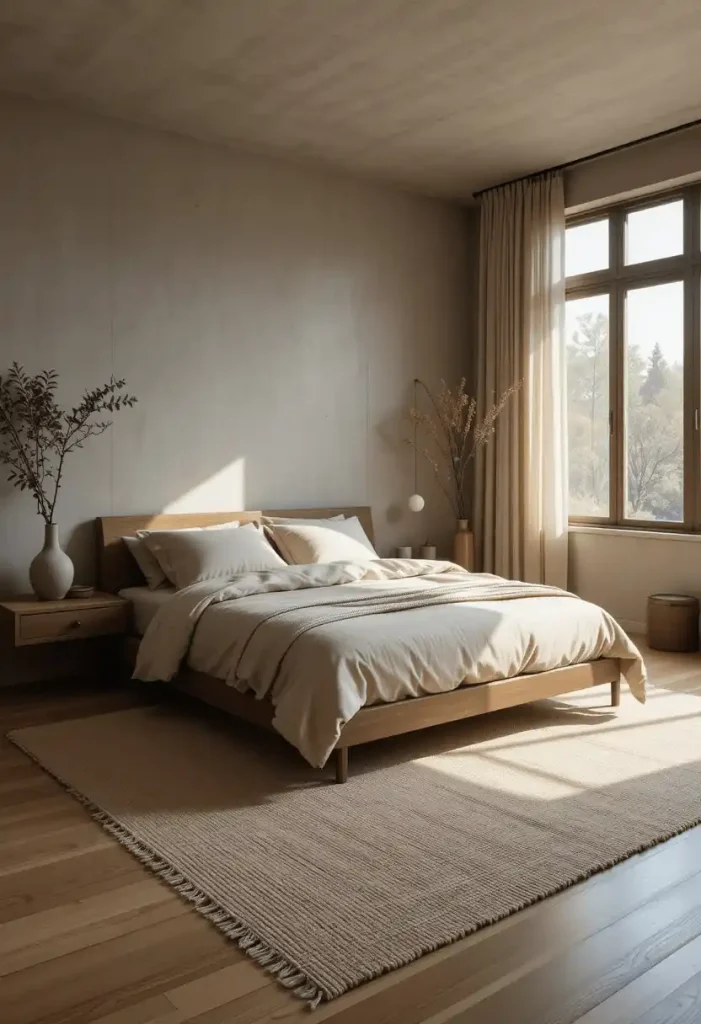
11. Incorporate Natural Fiber Rugs
Jute, wool, and woven cotton rugs introduce grounded texture underfoot. Their uneven weaves and muted tones reinforce the natural, imperfect language of the space.
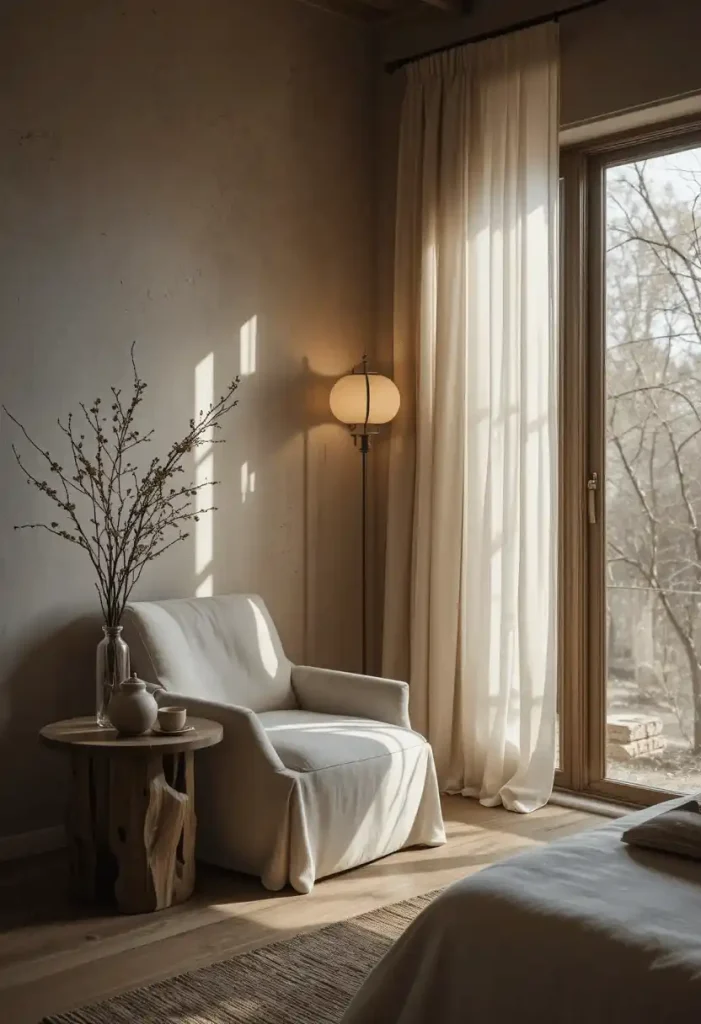
12. Create a Reading Corner With Organic Materials
A reading corner doesn’t require complexity. A linen chair, a wooden side table, and a soft glow of light are enough. The textures do the emotional work, making the space feel intimate and calm.
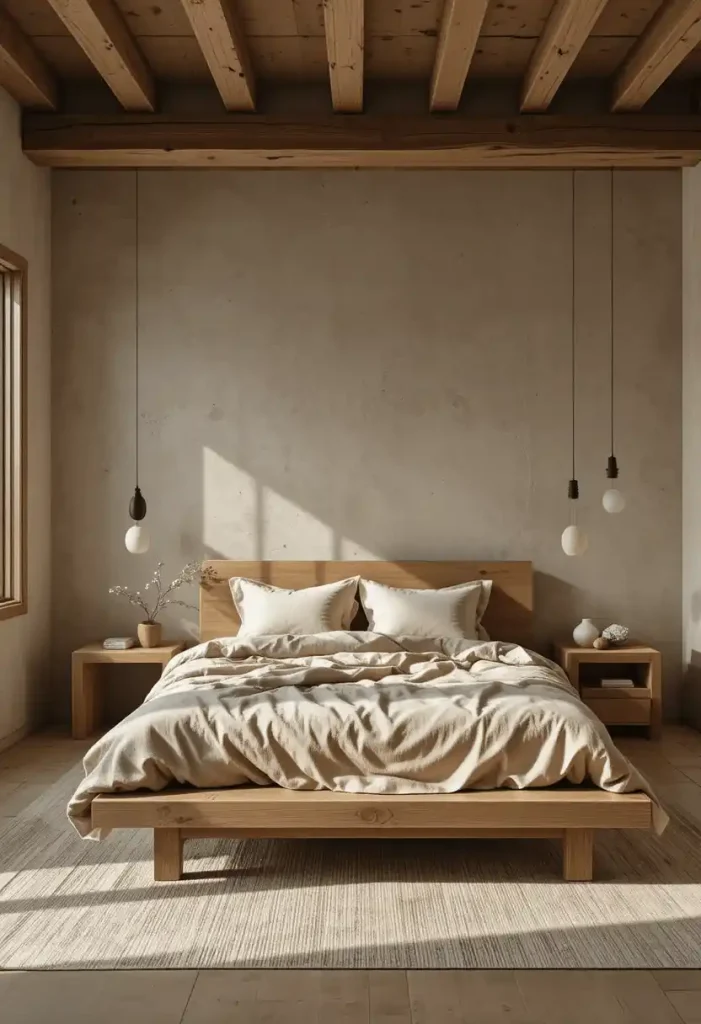
13. Use Unfinished or Raw Wood Elements
Raw wood celebrates honesty in material. Floating shelves, stools, or exposed beams show grain and irregularity, reinforcing the connection between the interior and nature.
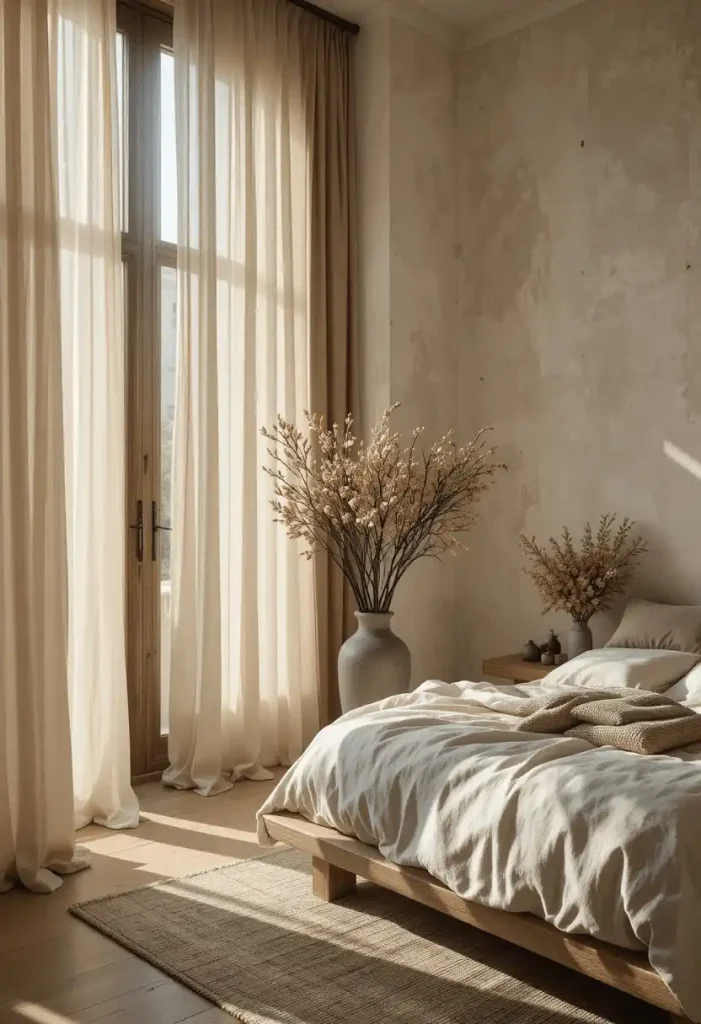
14. Add Sheer Linen Curtains for Soft Light
Light filtered through linen becomes soft and atmospheric. Curtains move gently with air, adding subtle motion that makes the room feel alive without being distracting.
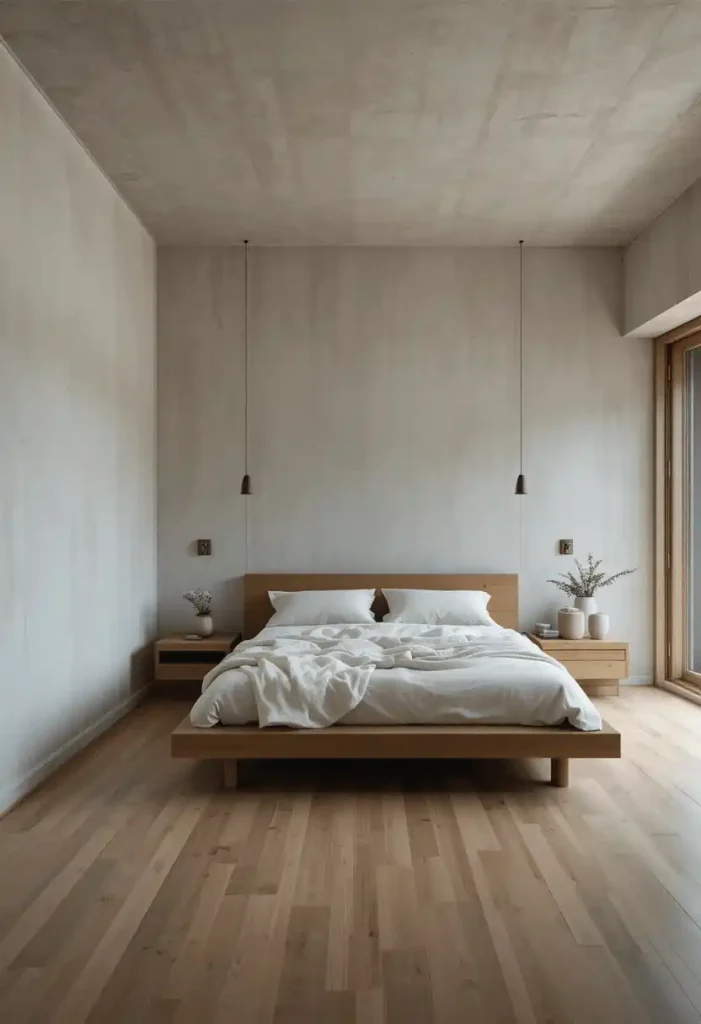
15. Celebrate Empty Space
Perhaps the most essential principle of wabi sabi design is restraint. Empty space is not something to fill—it is something to honor. It gives meaning to every object that remains.
Conclusion
A wabi sabi bedroom is not designed to impress—it is designed to calm. It grows through natural materials, soft textures, muted colors, and intentional emptiness.
Instead of striving for perfection, it embraces imperfection as its identity. The result is a space that feels grounded, emotional, and deeply human—a quiet retreat from everything that feels rushed or overdone.
In its stillness, it becomes something rare: a place where nothing is trying too hard, and everything feels exactly as it should be.