15 Japandi Bathroom Decor Ideas for a Calm and Beautiful Retreat
Japandi bathroom design sits at the perfect intersection of Japanese minimalism and Scandinavian warmth — two design philosophies that value simplicity, craftsmanship, natural materials, and intentional living. The result is a bathroom that feels serene rather than sterile, luxurious rather than excessive, and timeless rather than trend-driven. A well-designed Japandi bathroom isn’t about filling the space with decor; it’s about carefully selecting every material, texture, and object so that the room feels balanced, functional, and deeply calming. Think warm oak vanities, stone basins, soft lighting, textured plaster walls, organic ceramics, and a restrained color palette inspired by nature. These 15 Japandi bathroom decor ideas will help you create a space that feels like a boutique spa retreat — a sanctuary designed for slowing down and reconnecting with simplicity every day.
15 Japandi Bathroom Decor Ideas to Create a Spa-Like Sanctuary
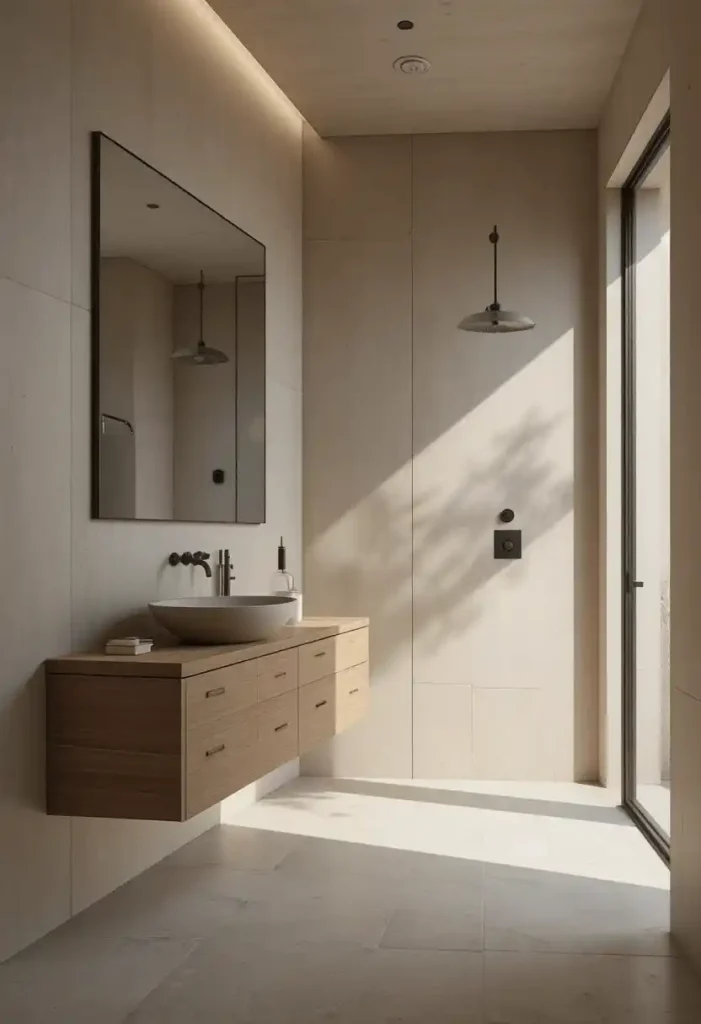
1. Floating Oak Wood Vanity
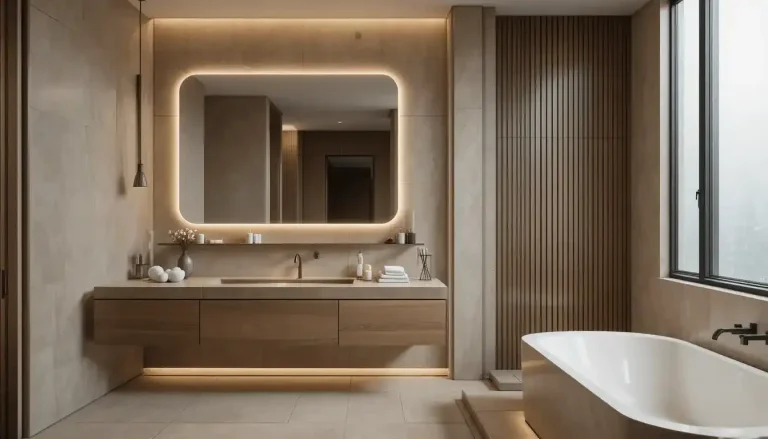
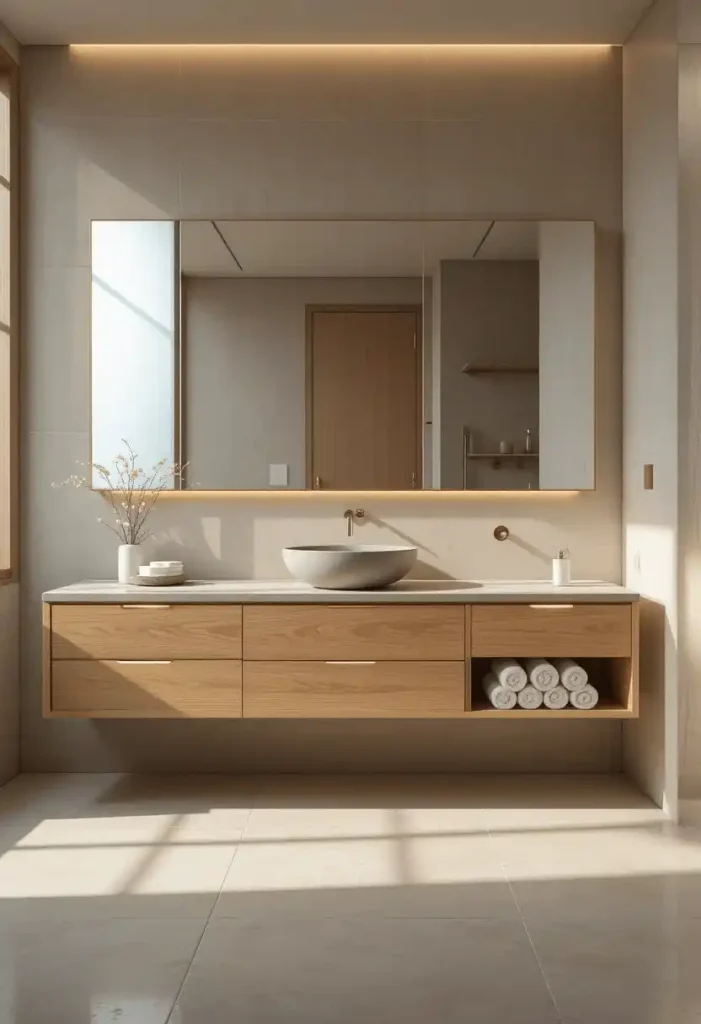
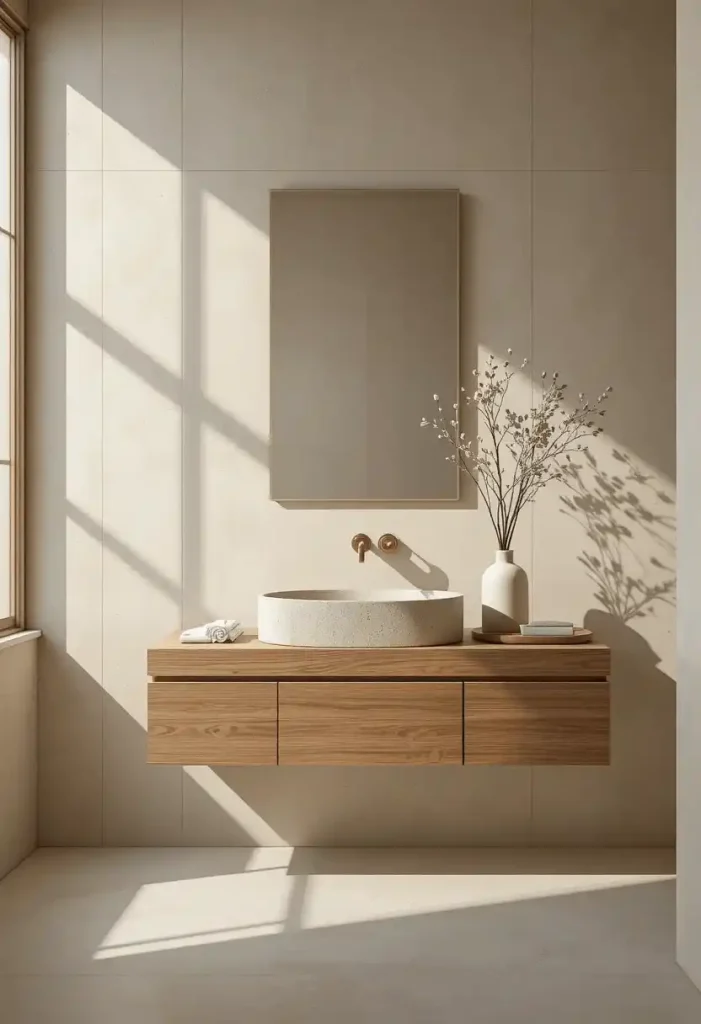
The vanity is the visual anchor of any bathroom, and in a Japandi design it should embody the principles of simplicity, craftsmanship, and natural beauty. A floating oak vanity achieves all three. By lifting the cabinetry off the floor, the bathroom instantly feels larger, lighter, and more architectural. The warmth of natural oak prevents the minimalist aesthetic from feeling cold while introducing organic texture that ages beautifully over time.
- Floating designs create a greater sense of openness and visual calm
- White oak and light ash work particularly well in Japandi interiors
- Handleless drawer fronts maintain a clean and uninterrupted appearance
- Natural grain patterns add subtle visual interest without overwhelming the room
- Pair with stone or ceramic countertops for material contrast
2. Stone Vessel Sink
Few elements communicate quiet luxury more effectively than a stone vessel sink. Whether carved from travertine, limestone, marble, or river stone, the organic texture introduces an earthy quality that perfectly complements the Japandi philosophy. Unlike highly polished modern sinks, stone basins celebrate imperfections and natural variation, bringing a handcrafted character to the bathroom.
- Travertine and limestone provide the softest Japandi aesthetic
- Round vessel sinks feel more organic than angular alternatives
- Natural imperfections add authenticity and visual depth
- Pair with wall-mounted taps for a cleaner vanity surface
- Neutral stone tones blend effortlessly with wood cabinetry
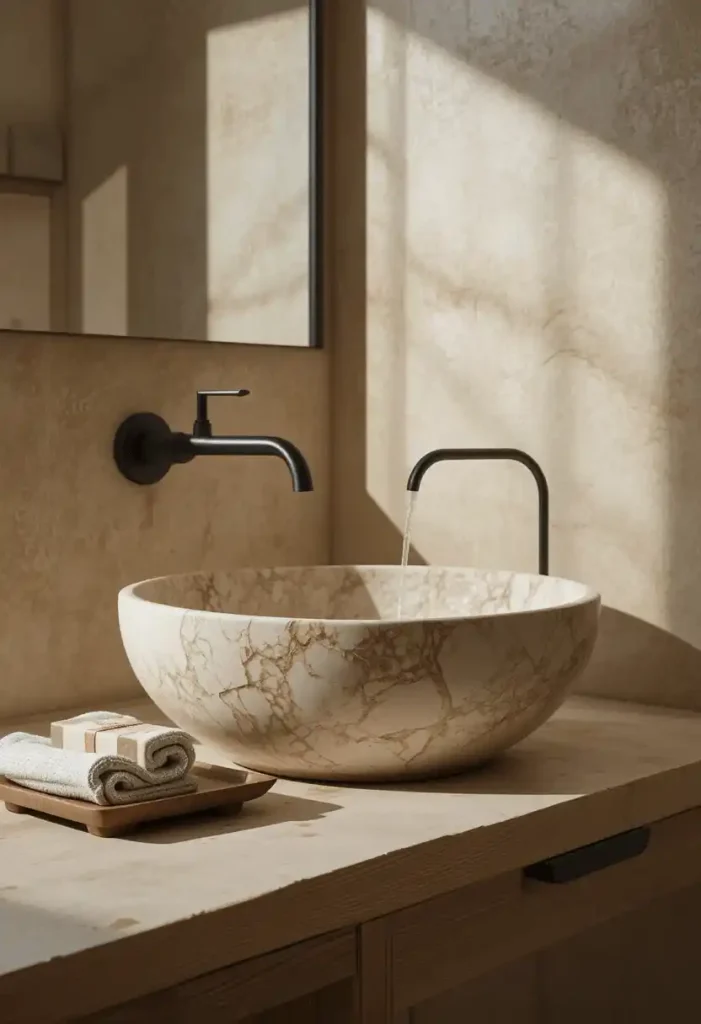
3. Warm Beige Microcement Walls
Wall finishes often determine the atmosphere of a bathroom more than any furniture piece. Warm beige microcement creates a seamless, spa-inspired backdrop that feels contemporary yet timeless. The subtle movement within the finish provides texture without relying on patterns or decoration, making the room feel peaceful and cohesive.
- Seamless surfaces visually expand smaller bathrooms
- Warm greige and sand tones feel softer than bright white
- Water-resistant finishes make microcement practical for wet areas
- Natural texture creates depth without visual clutter
- Works beautifully with stone, wood, and matte black accents
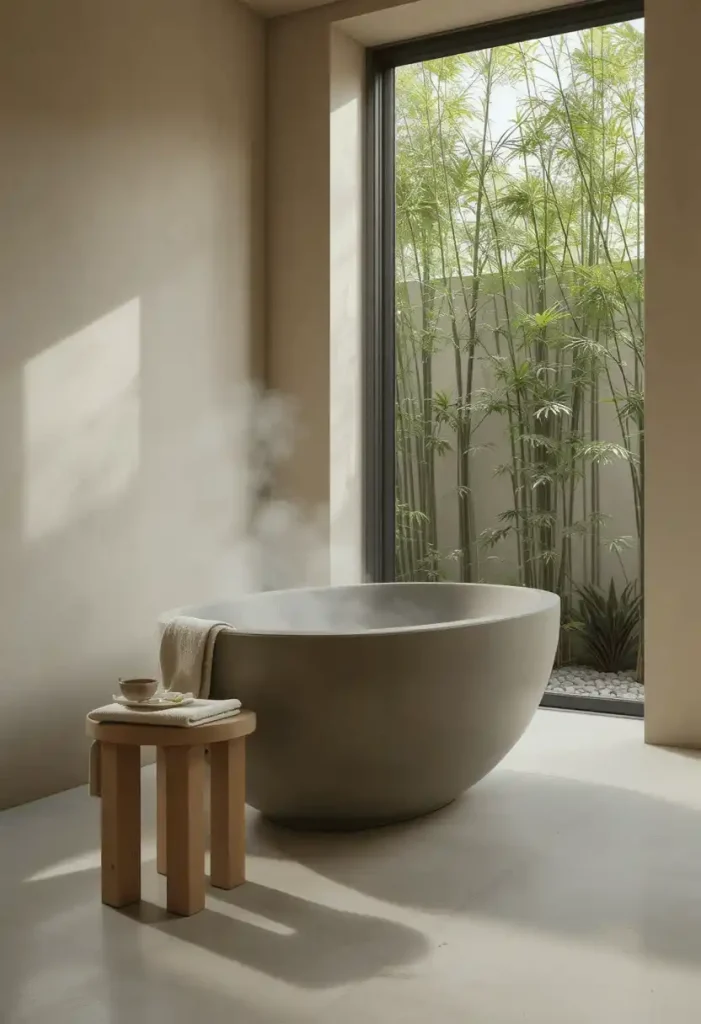
4. Freestanding Soaking Tub
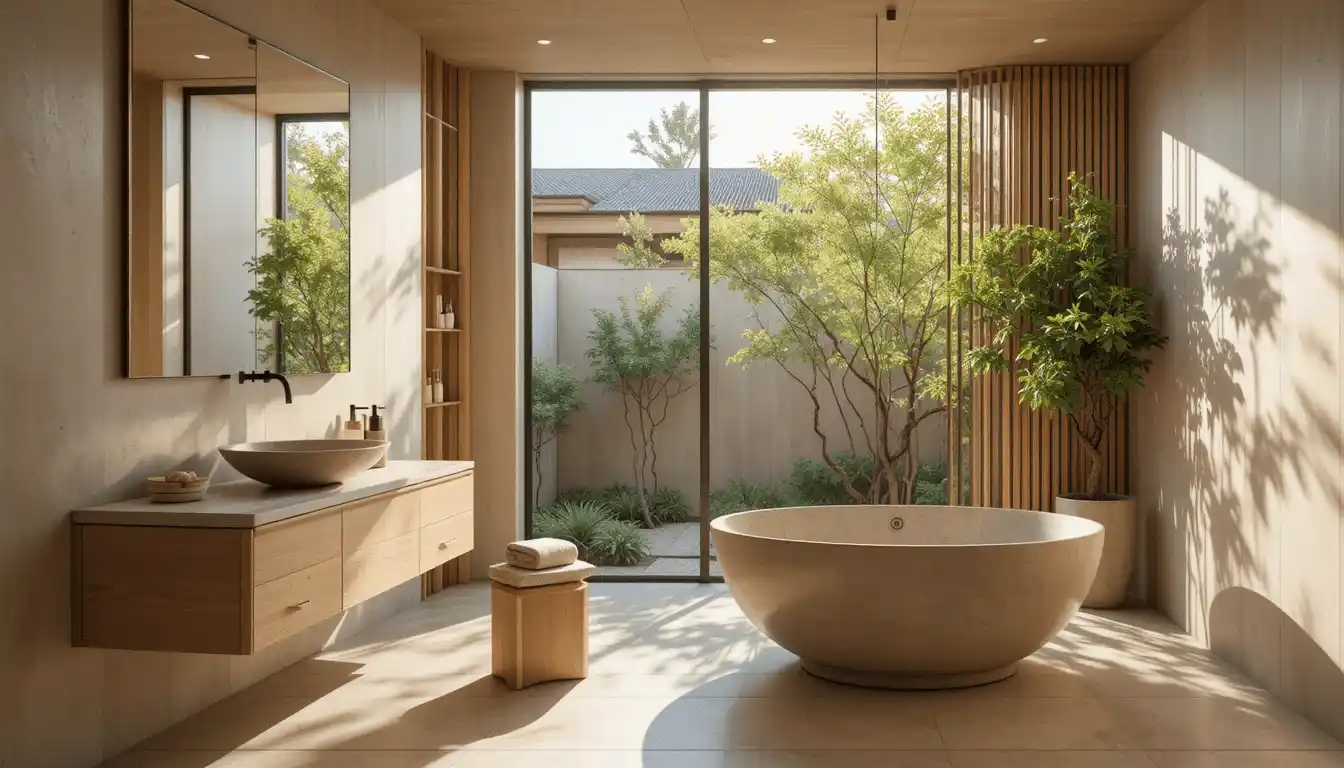
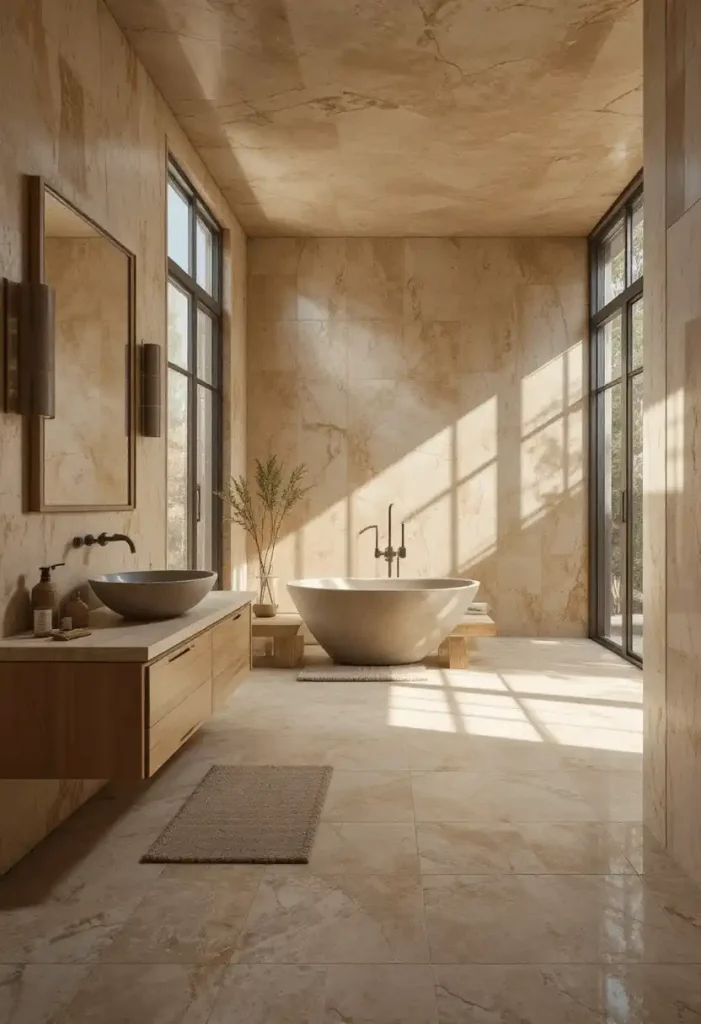
A deep soaking tub embodies one of the most important influences in Japandi design: the ritual of bathing. Rather than viewing the bath as merely functional, Japandi spaces transform it into an experience. A freestanding tub becomes the focal point of the room, encouraging relaxation and mindfulness.
- Oval silhouettes feel softer and more organic
- Position near a window whenever possible
- Matte stone resin finishes enhance the spa aesthetic
- Keep surrounding decor minimal for maximum impact
- Pair with a wooden bath stool and simple accessories
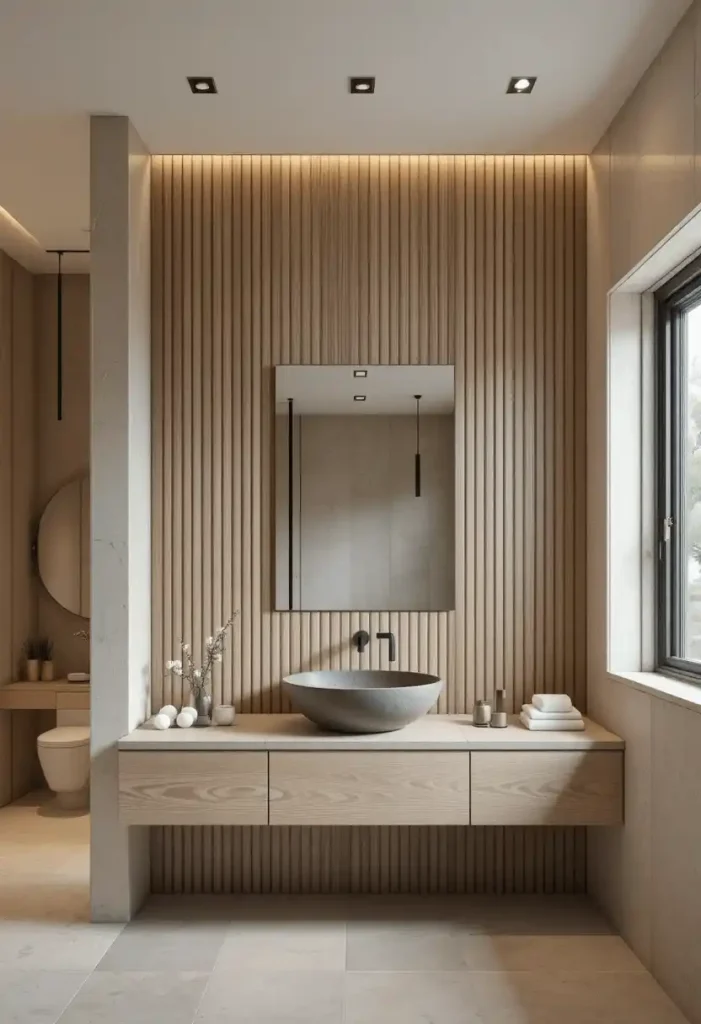
5. Slatted Wood Accent Wall
Wood slats introduce architectural texture while maintaining the clean lines essential to Japandi interiors. Whether installed behind the vanity or tub, a slatted wall adds warmth, rhythm, and visual interest without disrupting the minimalist aesthetic.
- Vertical slats make ceilings appear taller
- Natural oak tones create warmth and balance
- Hidden LED lighting enhances texture dramatically
- Works well as a focal wall behind the vanity
- Maintains simplicity while adding character
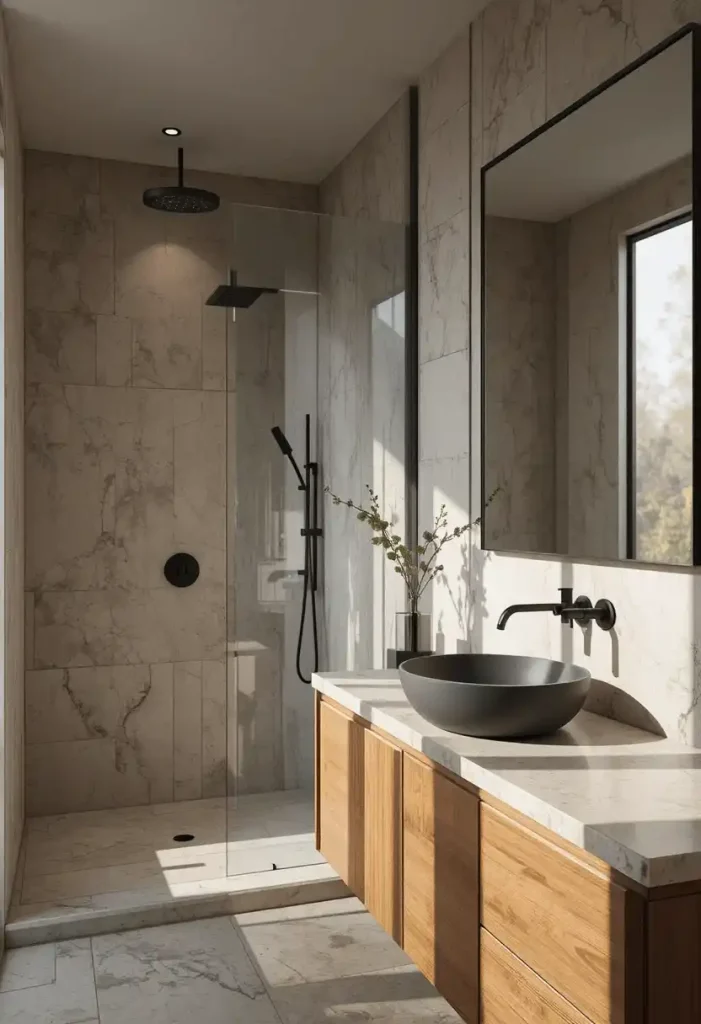
6. Matte Black Fixtures
In a Japandi bathroom, contrast should be intentional and restrained. Matte black fixtures provide definition and structure without overwhelming the calming palette. Their clean silhouettes create visual anchors that enhance the room’s architecture.
- Matte finishes feel softer than polished chrome
- Black fixtures pair naturally with wood and stone
- Choose simple cylindrical designs for authenticity
- Consistency across taps, shower fittings, and hardware creates cohesion
- Avoid overly decorative or industrial styles
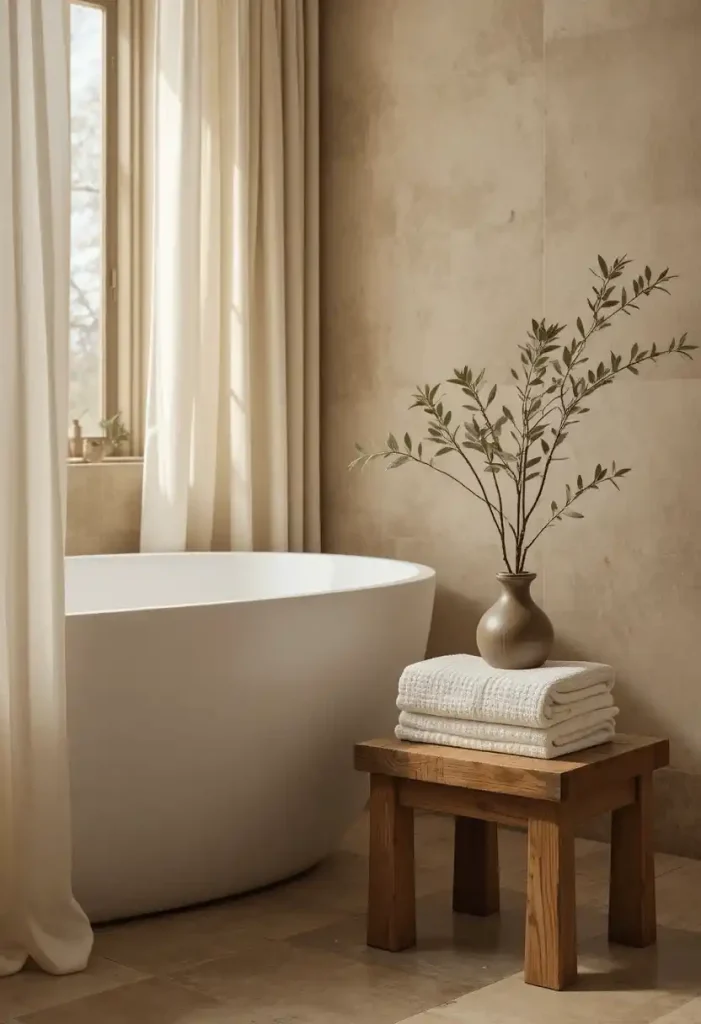
7. Wooden Bath Stool
The humble wooden stool is one of the most iconic Japandi accessories because it combines beauty and practicality. Used beside a bathtub or shower, it introduces craftsmanship and natural texture while remaining genuinely functional.
- Solid teak and cedar are excellent moisture-resistant options
- Rounded edges feel softer and more organic
- Can hold towels, candles, or bath products
- Adds warmth without taking up visual space
- Embraces the Japanese appreciation for everyday objects
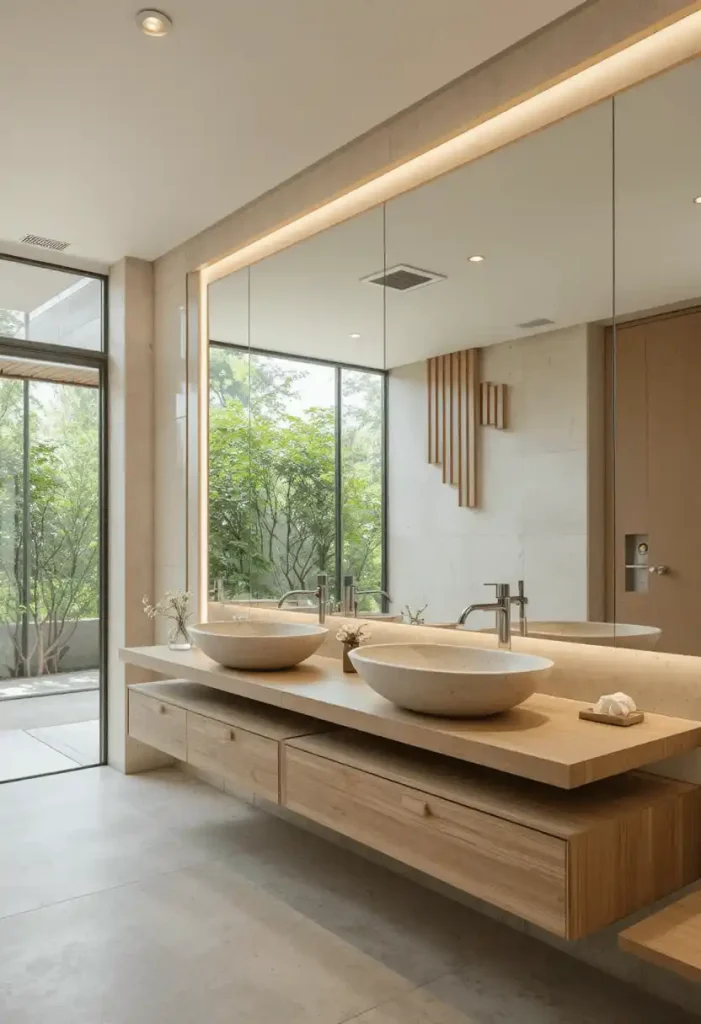
8. Large Frameless Mirror
Mirrors contribute significantly to the calmness of a Japandi bathroom when kept simple and architectural. A large frameless mirror reflects natural light and expands the sense of space while maintaining visual restraint.
- Oversized mirrors create an airy atmosphere
- Frameless designs feel cleaner and more contemporary
- Rounded corners soften minimalist spaces
- Reflecting natural materials increases warmth
- Helps maximize brightness in smaller bathrooms
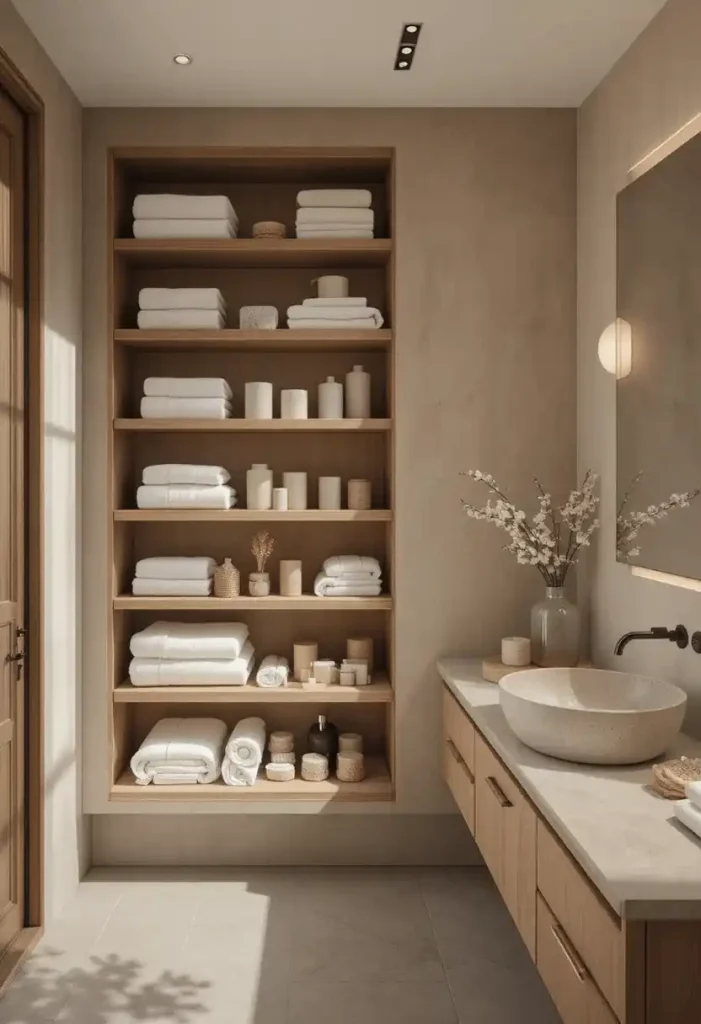
9. Open Wooden Shelving
Storage in Japandi design is never excessive. Open shelving made from natural wood provides both function and visual warmth while encouraging thoughtful curation of everyday essentials.
- Use oak or ash for a cohesive look
- Display only frequently used or beautiful items
- Rolled towels add texture and softness
- Ceramic containers create organized storage
- Avoid overcrowding shelves with accessories
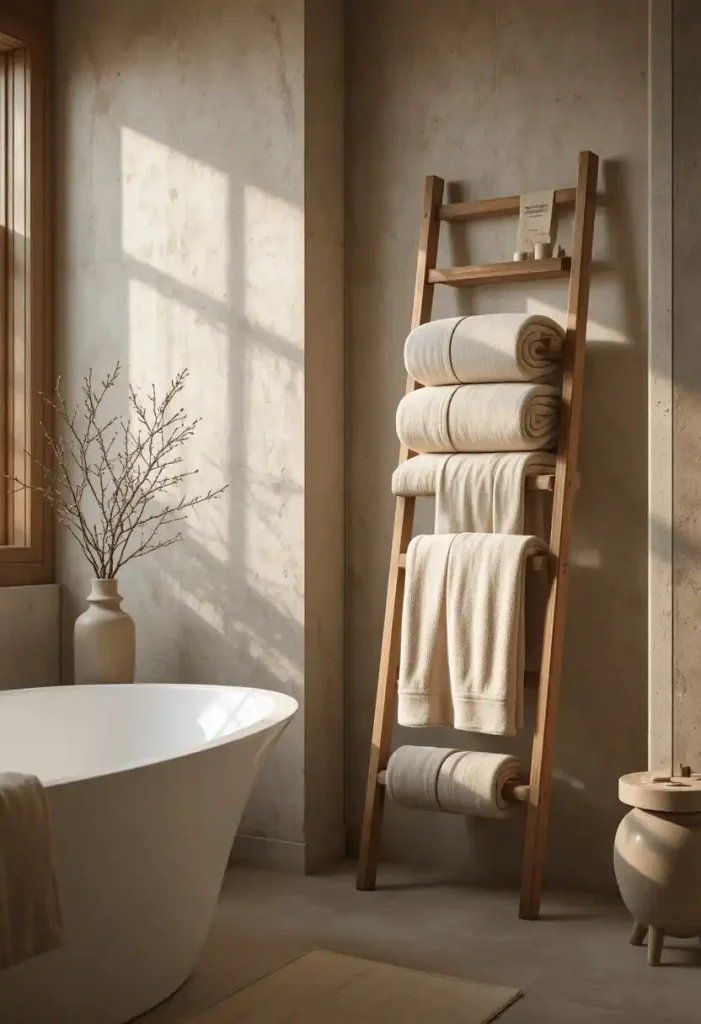
10. Soft Linen Towels
Textiles play a subtle but powerful role in creating a welcoming bathroom. Linen towels bring texture, softness, and understated luxury while aligning perfectly with Japandi values of natural materials.
- Choose warm white, sand, or oatmeal tones
- Linen becomes softer with every wash
- Textural variation prevents the space feeling sterile
- Display folded or rolled neatly
- Layer different neutral shades for depth
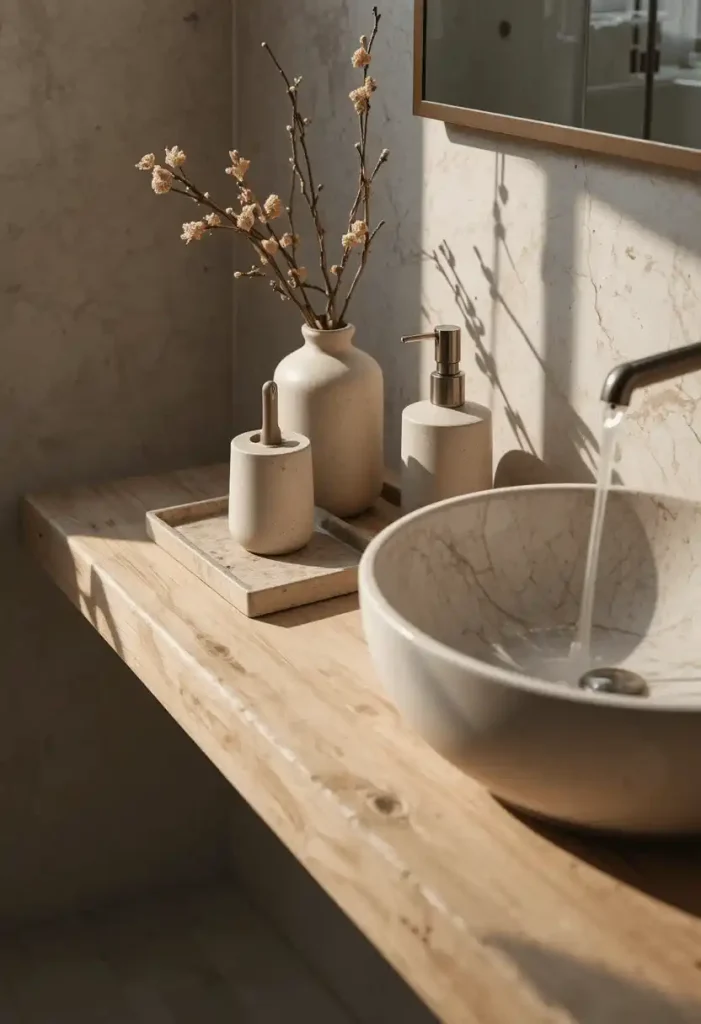
11. Organic Ceramic Accessories
Soap dispensers, toothbrush holders, trays, and storage vessels are opportunities to introduce craftsmanship and artistry into a Japandi bathroom. Handmade ceramics bring subtle imperfections that feel authentic and human.
- Choose matte finishes over glossy surfaces
- Neutral tones maintain a calm palette
- Handmade textures add visual interest
- Group accessories in small curated arrangements
- Avoid brightly colored plastics
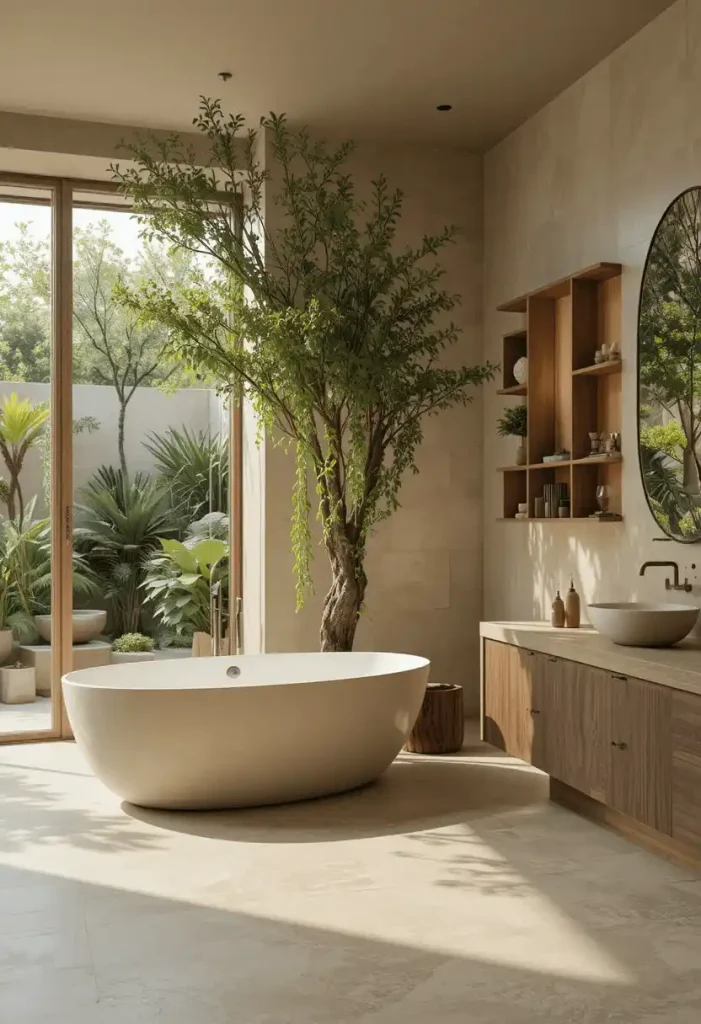
12. Indoor Plants and Greenery
Nature is central to both Scandinavian and Japanese design traditions. Carefully selected greenery softens hard surfaces and introduces life into the bathroom without requiring elaborate decoration.
- Bamboo and olive trees work beautifully
- Trailing pothos adds softness to shelving
- Small bonsai trees reinforce Japanese influence
- Plants improve the spa-like atmosphere
- Use simple ceramic planters in neutral tones
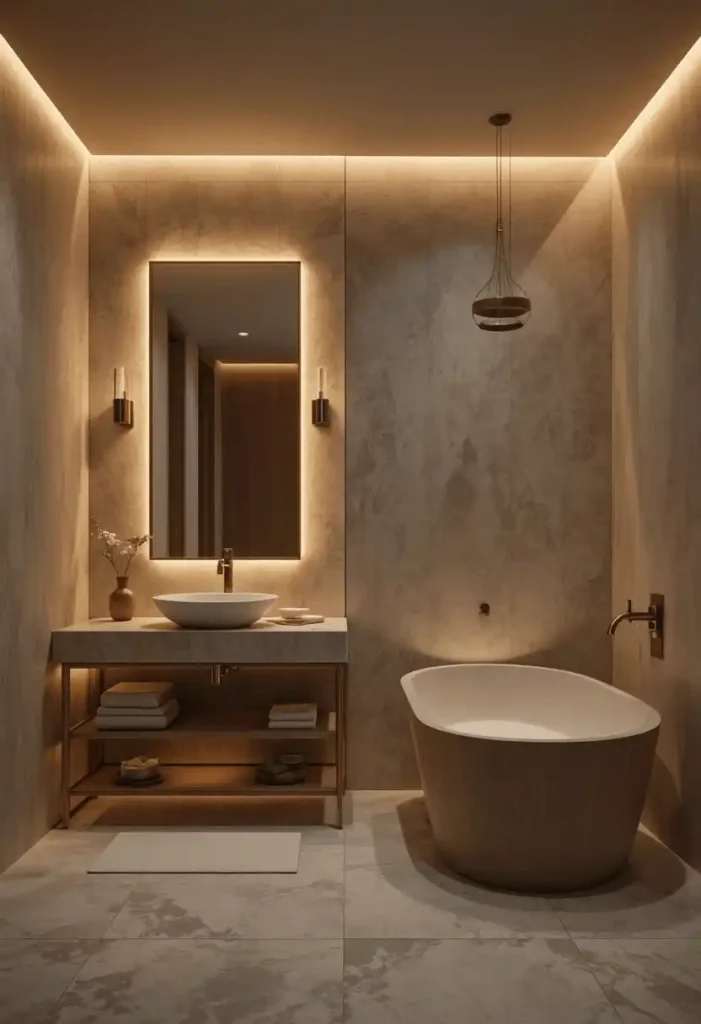
13. Soft Layered Lighting
Lighting determines how a bathroom feels more than almost any other design element. Japandi bathrooms prioritize layered, warm lighting that supports relaxation and comfort rather than harsh brightness.
- Wall sconces create gentle illumination
- Hidden LED strips enhance architectural details
- Warm color temperatures feel inviting
- Dimmers provide flexibility throughout the day
- Combine ambient and task lighting thoughtfully
14. Natural Stone Flooring
Flooring establishes the foundation of the entire bathroom. Natural stone creates a grounded and timeless atmosphere while adding subtle texture that feels connected to nature.
- Travertine is the ultimate Japandi flooring choice
- Large-format tiles reduce visual interruption
- Warm stone tones create a soothing palette
- Textured finishes improve slip resistance
- Pairs effortlessly with wood cabinetry
15. Minimal Decor With Meaning
The final principle of Japandi decorating is intentional restraint. Every object should serve a purpose, whether functional, emotional, or aesthetic. Instead of filling surfaces, focus on a few carefully chosen pieces that contribute to the overall feeling of calm.
- Display a single ceramic vase rather than multiple accessories
- Choose quality over quantity in every purchase
- Embrace empty space as part of the design
- Rotate decorative items seasonally if desired
- Prioritize objects that bring genuine enjoyment
Conclusion
A Japandi bathroom succeeds not because it contains more elements, but because every element works together in harmony. The floating oak vanity, stone basin, natural textures, warm lighting, and carefully curated accessories all contribute to a single purpose: creating a space that feels calm, restorative, and timeless. Rather than chasing trends, Japandi design focuses on craftsmanship, simplicity, and a connection to nature — qualities that never go out of style. Start with natural materials, layer in texture, keep the palette restrained, and allow each piece room to breathe. The result is a bathroom that feels less like a functional necessity and more like a private sanctuary designed for everyday wellbeing.